

With Free Skate Mag set to begin celebrating a decade in print we connected with magazine co-editor and co-founder Will Harmon for an “Industry” interview. Will has been contributing to skateboarding for so many years and continues by curating our window into what’s happening out there right now. We enjoyed hearing about the journey that led to creating this important publication…
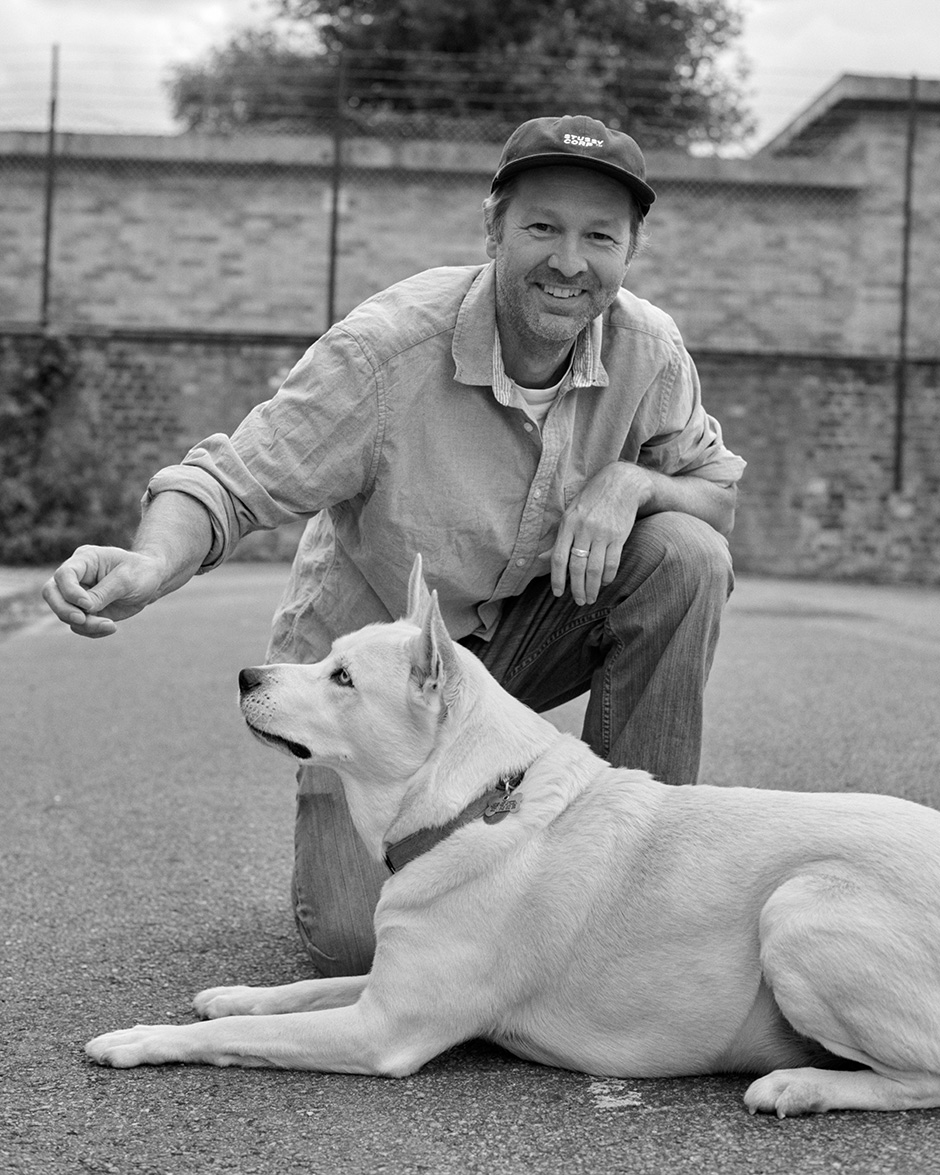
Words and interview by Jacob Sawyer. Will Harmon and his dog Walter. PH: Pani Paul
Will Harmon is a lifer who has been reorganising his life with skateboarding as a guide for many moons, a passion that has led him to play a part in different scenes and cities across the US. His story began in North Carolina in late 1987, when he saw some neighbourhood friends dropping off a kerb at his elementary school. This motion had an instant appeal and when the same crew showed him Thrashin’ a few days later the deal was sealed by a boardslide in the pool contest at Del Mar. This exciting new world prompted a flea market purchase of his first complete but Will broke a truck three days in to skating it. His parents hooked him up shortly afterwards with a Skull Skates setup that was hanging up in the local shop and his hometown quickly became his playground.
Up until 1996, Raleigh, North Carolina played host to his progression on a daily basis but exploring further afield had already begun when he graduated high school in 1994. He spent those important years exploring what cities like San Francisco, Boston, Philadelphia, and Washington DC had to offer, a desire to explore new scenes that has never lost its allure, formative experiences that were fated to inspire the first time he ever put pen to paper to write about skateboarding. Will was sponsored early on by Endless Grind skate shop and with photographer Pete Thompson as a close collaborator, was constantly out there gathering photos and footage. His first published photo, shot by Pete appeared in SLAP way back in 1993 and the fire was lit. Pete’s lens would also lead to his first video appearance in 411VM, a surprise to Will that came out a year later, and his first board sponsor Channel One. By the time 96 rolled around he decided to make his first big move to Boston
Will’s skateboarding history is storied and at this point spans decades. As well as amazing photos in every US mag there are other notable receipts from the nineties that serve as a reminder of how much he has killed it for years. His fakie 5-0 – fakie flip out at Love Park from his Wheels of Fortune part for instance will always be a standout manouevre for us, a poetry in motion clip that dates back to 98 and is a joy to revisit. One year after that key appearance Will’s board sponsor switched from Channel One to Supernaut and he walked away with a sick part in their Urban Canvas video shortly before the company disbanded. This point in his timeline coincides with him relocating to San Francisco, a pivotal move in his story. While the city wouldn’t prove to become a permanent home, his time there would tee up a new chapter and a chain of events that would eventually bring him back to the UK.
This is where this interview begins as we wanted to hone in on Will’s current role within the skateboard industry. The interesting sequence of events that brings us to his role today begins with a skate trip to London from his San Franciscan homebase, while working for the very first HUF store on Sutter Street. It is inspiring that Will, having already made a wealth of contributions as a skateboarder, found a way to continue being actively involved all of these years later. He is just as passionate about it now as he always has been and Free Skate Mag is a vital publication we have his dedication to thank for. Read on to find out more about what brought him to London, how skateboarding led him to writing, how his academic journey shaped his path, and how the magazine was born and continues to thrive…
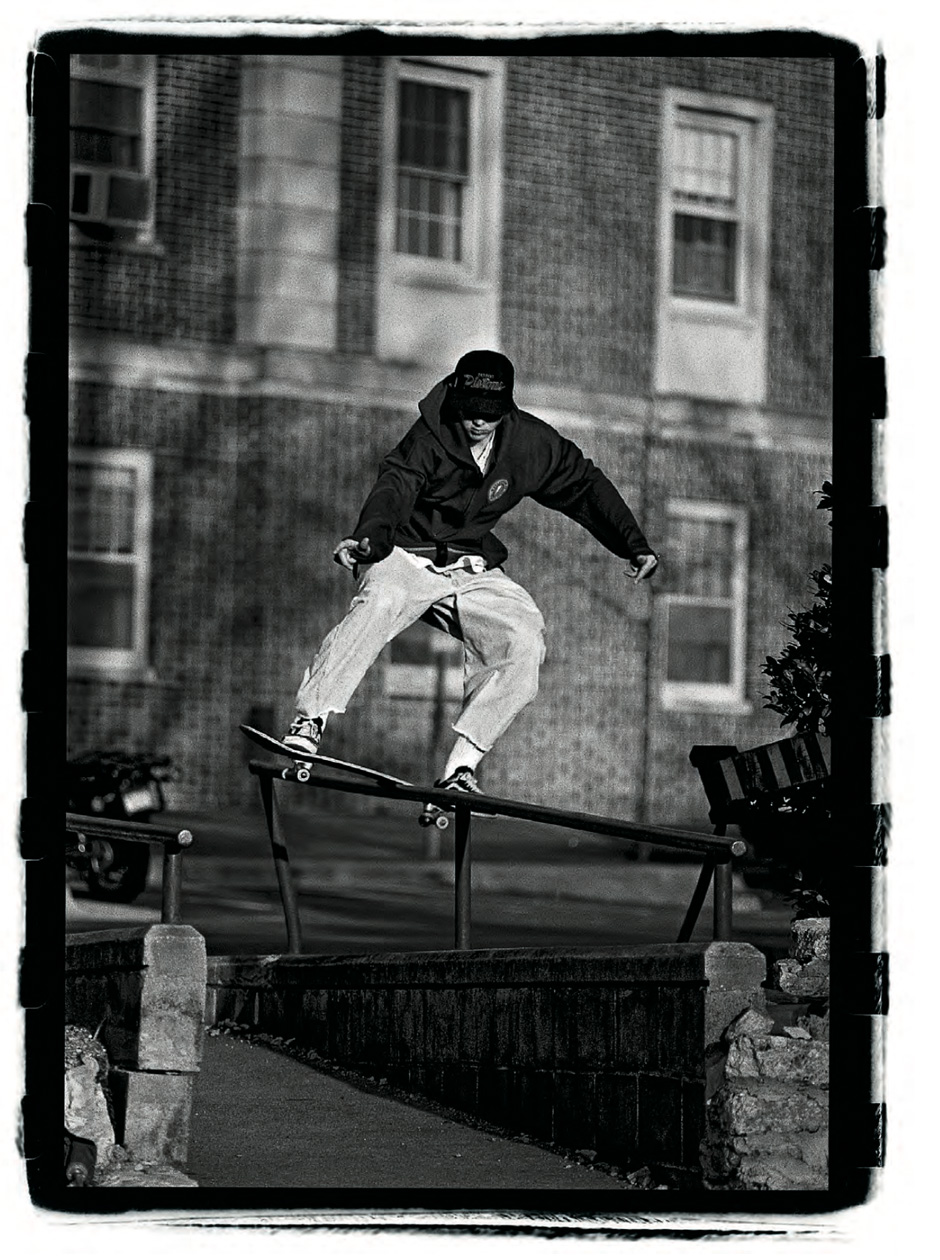
This boardslide in Raleigh, North Carolina took place in 1993 roughly thirteen years before this story starts. Will has been dedicated to the game for a long time! PH: Pete Thompson
We’re going to jump in to you working at HUF. What years was that and how did the job come about?
That would have been from 2005 to around 2007. I was working another job there in SF parking cars, they call that job being a valet over there. I would park the guests’ cars for a restaurant and hotel. That was a weird job because it was only three days a week but they were long hours. I would work from 11am through to 10pm or even midnight sometimes. It was only three days though so I had all of this free time, which meant I could skate a lot. I think that job only lasted a year and I had it already set up when I moved to San Francisco, I had been parking cars in Boston before that so I had experience. As that job was coming to a close I was going to go and work for my friend Elias [Bingham]’s valet company, which was called SFVP. That didn’t end up being as many shifts as working those three long days so I needed to have two part-time jobs. I was friends with Benny Gold and we would go skating with Keith [Hufnagel] sometimes. I can’t really remember how it transpired exactly but somehow through Keith I got a job two days a week at HUF which eventually turned into more days.
That was the very first brick and mortar HUF shop in the Tenderloin.
Yeah it was on Sutter Street and when I started there it was mainly known as a shoe store. It was the place to get limited edition sneakers/trainers in the Bay Area. When I started was when they had just recently opened a clothing store two doors over, as they couldn’t get the unit directly next door because it was a dry cleaning place. That initial clothing space was before HUF clothing was the main thing, it was full of other brands like Stussy, Nexus VII and other early streetwear brands. I first started working in the shoe store and later moved on over to the clothing store. Working there you got to meet a lot of celebrities and a lot of people in the industry. Keith [Hufnagel] was really nice to work with. He was always really good at introducing you to other people. He was incredible at opening doors for us, and he was keen to share all of his know-how with us too.
What did you learn from working with Keith?
Just his work ethic really. He worked really hard but he also wanted to share everything with his friends. He didn’t want any project to be solely something he had done. He wanted all of his friends and employees to be involved in other ways. He didn’t want us to be just ringing up items at the till, he welcomed our input. Other employees helped to design shoes when it came to collabs. He was altruistic, he wanted to help everybody else, and through being like that he received a lot of support and other people really backed what he was doing. People wanted to work with HUF because of the way he carried himself. The way he conducted his business made other people want to work with him. He was always sharing and so interested in what other people were doing as well.

Two photos shot by Pete Thompson in San Francisco long before Will relocated. Backside tailslide above Embarcadero brick in 1994 and frontside 180 fakie nosegrind on a tall one in 1999
What did you learn from your retail experience?
I’m not ashamed to admit that I was probably a terrible retail employee. My mind was on skating. Luckily there weren’t smartphones back then so I wasn’t just staring at that. We had a computer in the shop and we would look at a lot of skate content, but then also streetwear blogs and stuff. It was an era when I was interested in sneakers so we would be interested in new shoes, clothing as well. When you work in that world those things become more interesting so I became engrossed in that culture. I met shoe designers for Nike SB from working there, lots of people who were just starting out who went on to become bigger names in the streetwear world after that. For instance my friend Mega [Michael Yabut] who worked in the shop started a company called Black Scale, which became big, my friend Bong [Sigua] from the shop has a famous vintage clothing store called Big Time Vintage in San Francisco now. People went on to do great things and Keith would always help you with your own projects, he would encourage that which was a wonderful thing to be a part of.
“Keith [Hufnagel] was really nice to work with. He was always really good at introducing you to other people”
But as for me as retail employee? I just wanted to skate all the time at that moment. We had a shop board that we would always skate on out the front. I was obsessed with Nike Air Max 1s at the time and I would always go to work wearing Air Max but then I would want to skate. I remember one of my friends who worked at the shop Marcel [Turner] would leave his shoes there. I’d put his Dunks on to skate out the front sometimes and have to apologise. It was a lot of fun but I probably wasn’t the best retail assistant back then if I’m honest. I was interested in trainers and streetwear but it wasn’t my main passion, I was still completely obsessed with skateboarding.
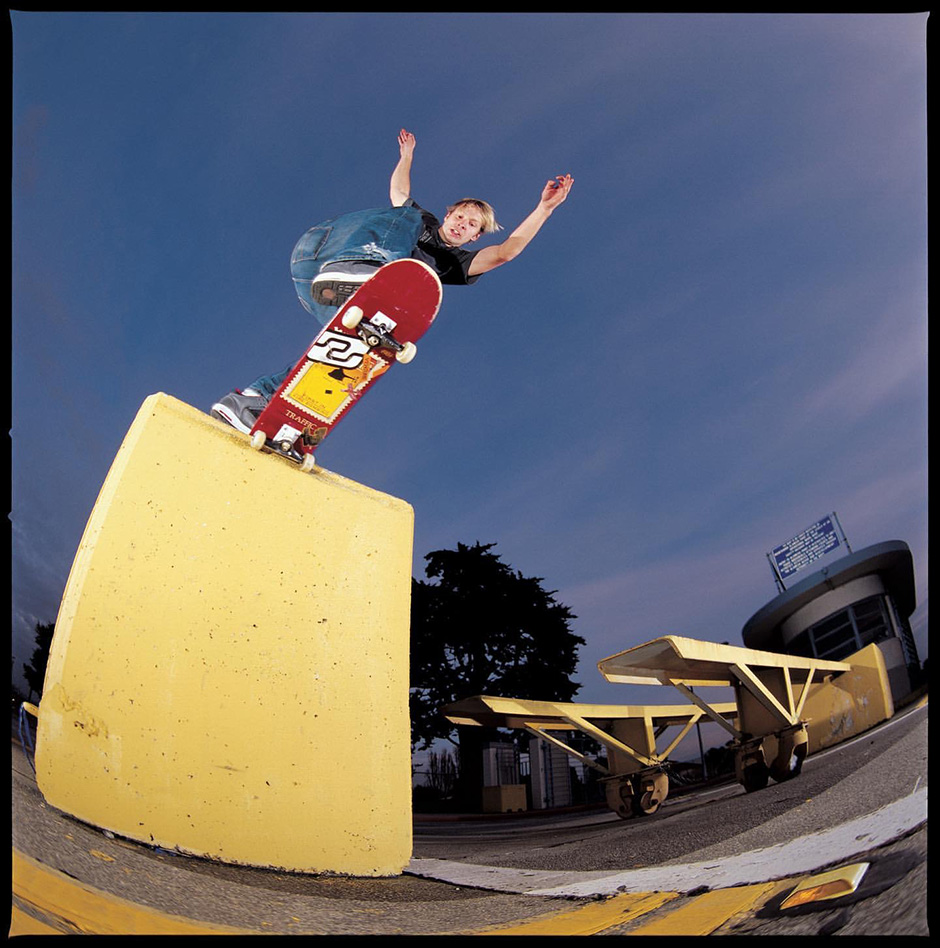
Backside tailslide in Alameda. This was shot in 2005 when Will had just started working at the HUF Sutter Street store. PH: Dan Zaslavsky
Can you tell us your Dave Chapelle story?
Lots of famous people passed through. Robin Williams lived in San Francisco so he would come through. I remember Talib Kweli coming through. You were there the time Spike Lee came through. He was sitting there for a couple of hours and Keith went to get him some special sneakers for him from his own personal collection. But one day I remember this guy coming in, he told us he needed to get some shoes for his client. He wanted to pick out a few pairs, leave his credit card and take them to his client to see if he likes them. Then he was going to ring back and either purchase or return the shoes. He had an intricate plan that involved his client staying put. We didn’t know what the hell was going on but he let it slip that his client was Dave Chapelle, and that he needed some new shoes for a performance later that night. It turned out that I would be going with that manager and taking six pairs of shoes his manager picked out for Dave to check out. We got in this huge SUV and drove to the top of the hill, he was staying in a fancy hotel on the top of Mason Street.
“We drove back in the SUV, I got out of the car outside HUF with Dave Chapelle, which was pretty exciting, then he picked out a load of shoes that he liked”
I go into the room with the manager and Mos Def is sitting on the bed, there’s one more guy there, and Dave Chapelle. I talked to them for a bit and he was really nice. We talked about skating a little bit because he actually had a Krooked board there in his hotel room and I knew he had recently skated with a few of my friends in North Carolina. They closed the skatepark so he could skate for a bit, which I thought was cool. It was sick that he knew skating so it kind of felt like a small world coincidence. Anyway, it turned out that none of the shoes his manager had picked were to Dave’s taste so it was decided that he was going to come down to the shop to try on some shoes. I called ahead and we closed the shop so he could come and try some stuff. I remember getting in the lift with him at the hotel and people were just staring at him, they recognised him and he said “Hello, nice to meet ya!” as only he could. We drove back in the SUV, I got out of the car outside HUF with Dave Chapelle, which was pretty exciting, then he picked out a load of shoes that he liked. Keith [Hufnagel] was elsewhere at the time but we told him what was going on and he said to give him a load of t-shirts. When they bought the shoes the manager gave us four free passes to the Block Party show that night, which was sold out. So we all got to go to that, which was sick. In the middle of the performance Mos Def came on stage and he was wearing one of the HUF shirts we’d given him, that was amazing. Dave Chapelle was really nice, really kind, and really down to earth. It was quite a surreal experience in retrospect.

Will’s Check Out in Transworld from 1995 featuring a J. Grant Brittain photo at the Carlsbad bump and Pete Thompson video grabs. The crooked grind pop over photo in Boston was shot by Ben Colen and appeared as a Who’s Hot? feature in Skateboarder in 2000
While working at HUF something notable happened concurrently. How did community college reignite the joy you found in writing?
At that time I was still completely obsessed with skateboarding, it was that time in my life, I was in my late twenties. I hadn’t gone to university right out of high school, I didn’t think I would be able to study something for four years when my mind was elsewhere. When I moved to San Francisco I did the same thing I had done back East, I worked whatever jobs so that I had some money and enough time to skate as much as I wanted to. Then something happened, I got this feeling in my late twenties that I needed something, an interest outside of skateboarding or some kind of career path or skill. It’s that classic worry that I think a lot of people get at that age. I didn’t know exactly what I wanted to do so I took some classes at the local community college. My friend Elias Bingham and my other friend Mississippi Joe [Barnes] were about to do the same thing, they were having the same anxieties and realisation. I took all of these different classes, it was two days a week so it wasn’t too much of a burden. I took a political science class, a history class, and an English class. You could earn credits at this community college and transfer over to a proper university from there. I seem to remember Alex Klein going to the same college CCSF and transferring from there to Berkeley, it was a pathway so it seemed like a positive idea.
“After taking all of these different courses I realised that I enjoyed writing…That was the first time I considered pursuing that in any way”
After taking all of these different courses I realised that I enjoyed writing. When I was in high school I hated all of my math classes, and I had no connection to the sciences. For some reason writing in English class didn’t annoy me, I was okay with it. So when I went to these college classes I rediscovered the joy in reading and writing again. That was the first time I considered pursuing that in any way. However I hadn’t considered writing about skateboarding, that hadn’t really occurred to me, I just enjoyed writing. This was probably around 2006, I took a few courses during the spring semester then came over to London in the summer for two-and-a-half months with Josh Stewart and a few people who were filming for Static III like Pat Stiener, Tony Manfre, Nate Broussard, Bobby Puleo, etc.. Josh was in London filming with Olly Todd and various other people. Keith [Hufnagel] was wonderful about that, he let me dip out for that whole trip and assured me I would have a job when I came back. That was pretty incredible.

Frontside shuv in Holborn on a 2006 Static III trip. This photo shot by Dom Marley would lead to Will’s first piece of published writing
Tell us how a photo you shot with Dom Marley on that trip led to your first piece of writing being published…
So I was in London for a couple of months that summer and knew I needed to return because I was enrolled in classes starting in September. When I had returned from London during my first semester back I got an email from Niall Neeson who was the editor of Kingpin Magazine at the time. I had shot a photo in London with Dom Marley, it was a front shuv on that metal wave sculpture in Holborn. Niall was asking me if I would be interested in writing something for their “Are you Experienced?” feature as they wanted to run the photo. This had to be an account of a noteworthy experience from your life in skateboarding. I wrote about the time myself, Kenny Hughes, and Matt Willigan went to Boston for the very first time. Our car got broken into on the way up, in Philly, they stole all of our clothes and the only thing they left was our skateboards. We had stupidly left everything in the car while we stayed in a friend’s hotel room for the night. So the three of us sat in Philly that morning with the car window busted out deliberating about returning home or keeping on and going to Boston. We ended up deciding to go on to Boston.
 We washed our clothes every night in the sink. Kenny [Hughes] and I were sponsored by Puma at the time, and that was where Puma was based so we drove there and got trackie pants/tracksuit bottoms and new shoes. It was weird, this was 1995 so it predated Josh Kalis making trackies a thing, but we had some clean stuff to wear. It turned out that we had the greatest time in Boston that trip despite any setbacks. We met all of these people and it didn’t really matter that we had lost these personal items, these material things, because we had gained such a great experience from being there. I ended up moving to Boston the following year.
“It was the first time I had written about skateboarding and it opened my mind”
That story is what I wrote about. It was the first time I had written about skateboarding and it opened my mind. I had been studying English for the past year and never written about skateboarding, I enjoyed it. This was at the same time that I had decided I wanted to move to London. I moved there the following year in 2007. I came out again before that to check out universities because I didn’t want to work random jobs, I wanted my focus to be on learning a skill, some kind of career. I applied to all of these different universities and was accepted at them all apart from Goldsmiths, haha, so I chose to go to LCC, London College of Communication, which is part of the University of the Arts. I enrolled in a journalism course and moved to London in March 2007.
Gareth Skewis helped setting you up before your studies began…
Yeah he helped me out a lot. Thank you Gareth! He found a place for me to live and work. I got a job in this shop called The Three Threads, which was through Carhartt Work in Progress, Pointer Shoes, and Edwin jeans. Those were the three threads that tied the shop together. I worked there full-time when I arrived before my course started then moved to part-time while I studied journalism.
Dipping back to the Kingpin article. This obviously planted a seed because you told me that shortly before moving to the UK you hit up Mark Whiteley to see if there were any intern positions available at SLAP….
I wrote that story at the tail end of 2006 and I had already decided I was going to move to London but had about four months where I could have done something. I hit up Mark because he was a friend of mine to enquire about internships. They ran an internship program but he told me there was a really long list of people ahead of me. By the time I could have done it I would have already being situated in the UK so it never happened. That didn’t work out but doing that little story for Kingpin opened up the idea of writing about skating. When I did move to the UK, I don’t remember exactly how it started but I began to do little interviews with people I already knew. I’d work on them and they would run in Document or Sidewalk.

This backside heelflip off a ledge was Will’s first published photo. It ran in the March 1993 issue of Slap, a mag he nearly interned for. PH: Pete Thompson
Who did you speak to?
I interviewed Patrick O’Dell right after the John Cardiel Epicly Later’d episode came out, that was really exciting. I interviewed Bobby Puleo about his artwork for Plus 1 magazine, I spoke to Stevie Williams. It was the first time I had spoken to other skateboarders over that Q&A format and submitted the results to a magazine. Being a sponsored skater in my twenties I was in a lot of circles with these people, I was already friends with them so it wasn’t hard to reach out to them as it didn’t come out of the blue. That really helped me starting out that way.
What are the main skills you learned while studying journalism that have been helpful since?
I think about this often, because what I learned on my journalism course is probably quite different to the kind of writing I do now. I wish I had taken a creative writing course at some point but I didn’t. I was the news editor of the university newspaper for a semester. What that helped me with the most was delegation, and managing all of these other people. They are sending you their words, you’re editing it, figuring out which story leads, what goes where, what are the headlines, etc. I think dealing with all of these other people, taking their work and moulding it together was a skill that benefited me the most when I became the editor of a skateboard magazine myself, even though the writing itself was vastly different. It taught me the organisation required to be on top of freelance contributors. Learning to be the editor of the university newspaper really helped me I think.
Would you recommend a course in journalism if someone had aspirations as a writer?
I don’t even know how it is now. One of the difficult things for me was that learning shorthand was part of the program. Learning these symbols to be able write quicker when taking notes… It’s what people have to do in court. I was terrible at this but somehow squeaked through the test to pass that module. It was like being introduced to algebra, something my brain found hard to comprehend. I just wasn’t fast enough at shorthand. I had to figure another route that didn’t involve that. Friends on my course were good at it and ended up reporting in the Houses of Parliament doing just that. It wasn’t a deal breaker as journalism encompasses many different things. I thought the course was useful and it taught me a lot but I can’t say what it would be like now, maybe shorthand isn’t even a thing now with all of this AI tech and transcription tools available. That’s a hard question to answer properly but I personally got a lot from it when I was there.

At the tail end of his degree Will frontside flipped this gap to switch manual for Chris Mulhern’s “This Time Tomorrow” video
What mags, specifically the editorial within them would you cite as being an inspiration?
Growing up we all liked Transworld, Skateboarder, SLAP, and Thrasher. Maybe I was at the exactly right age but I was really hyped on SLAP and the way the writing was in that mag. I liked the different voices and how sporadic the articles were. As I grew older Skateboarder was one I really enjoyed reading. Those two were the ones I read the most and I probably looked at the photos in Thrasher and Transworld more than I read the articles.
Shortly after finishing university you wrote a piece about the history of Slam City Skates that was a departure from the Q&A formula. Was that a turning point in how you thought about things?
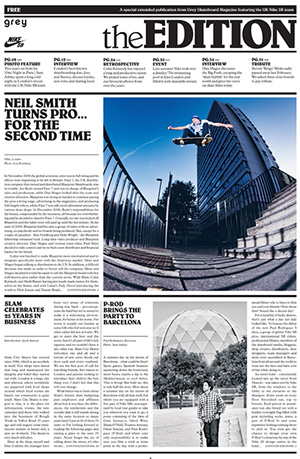 Whenever I wrote anything on my journalism course it was never in a Q&A format. Everything needed to be written with references and quotes. That article was the first time I had explored that in a skateboarding context, interviewing multiple people and piecing the story together. I think that was in 2011 and it was published in The Edition, a special newspaper that Grey magazine put together. When Henry Kingsford first started Grey I helped him with some interviews and pieces for the mag, I guess I was a staff writer for the mag for a little bit.
That’s a good experience of a mag starting from scratch and getting to be a part of it.
Exactly, I wasn’t a part of the first issue but definitely had stuff published in some of the very early issues. I remember writing up questions for the Gonz [Mark Gonzales] and visiting him in his hotel to give them to him because we were getting him to handwrite the answers. Then a couple of days later I went to collect the answers and he gave them back to me but gave me all of these drawings as well. That was really wonderful. Getting to interview different skaters for Grey was really cool. I was doing stuff for Sidewalk and other mags at that time too but Henry [Kingsford] really had a lot of faith in me and did a lot for me. Thank you Henry!
In the summer of 2013 you became editor-in-chief for Kingpin magazine. Was that trial by fire?
When they offered that to me I was really back and forth in my own mind as to whether I should do that or not. It felt like a big step and suddenly your work is out there a lot more than an interview here and there. I really wrestled with it but figured if I didn’t try it then it would be something I always think about. I may have turned down the chance to be an editor and the opportunity would never arise again. I was working for Supreme at the time in the warehouse and I was making quite good money but wasn’t using my degree or anything I had learned from my studies. I convinced myself that taking the job at Kingpin was the right move. I met with Alex Irvine who was the editor at the time, he talked me through it, and reassured me about certain things. After talking to him I was more confident and Sam Ashley who was the photo editor at the time was pretty instrumental in getting me the job too, he really vouched for me.
Your job followed Niall Neeson and Alex Irvine editing the mag. Was it strange coming in and being a new voice for something that had two distinct ones already?
Yeah, and I didn’t really know what my voice was at that point either. When you become an editor you end up writing so much more than just the occasional interview so it was a learning curve but it was useful.
What did you learn while performing that role?
Before that I was obviously into skating but my focus was mostly on what was happening in the UK, where I lived. Working at Kingpin we were paying a lot more attention on what was going on in the rest of Europe. So through that job I learned about so many other different scenes, what was happening in Finland or Sweden. Or learning more about the scene in Spain, places I had visited but didn’t know the inner workings of the skate scenes there. At Kingpin they had editors in different countries, there was a French editor, a German editor, a Spanish editor. I got to meet all of these guys and they would clue me in on what was happening in their respective scenes.
“I got to meet all of these guys and they would clue me in on what was happening in their respective scenes…It was so valuable to have these people that could help you with your job as editor”
One thing I learned early on was having these other people I could reach out to, people who could help clue you in to what was happening in these other places. It was so valuable to have these people that could help you with your job as editor. With Kingpin we did an issue every month so every month around the 18th to the 22nd I had to be in London at the office working on the issue. That was slightly tough, if there was event or a trip going on I couldn’t attend because I needed to help deliver the mag from the office. That’s why when we started Free we knew we wanted to put the mag out every other month to avoid that.
What are you proudest of delivering while at Kingpin?
 With Kingpin there were so many people involved. Sam [Ashley] and Arthur [Derrien] obviously who I still work with today but also Jan Kliewer, Sem Rubio, Matt Ward, Nikwen [Nicholas Huynh] and more.There was a long list of people so it’s not so much what I was proud of, I was proud of that team and what we managed to put out there together. It was cool working with all of those other people and managing to get a magazine out there every month. Before I started there were straplines, little things on the cover about the contents or random little lines of text or quotes. When I started we did away with that quite quickly, we ran the magazine logo and the skate photo, that was it. That was one of the first decisions we made and I’m happy we did that. Lots of magazines are the same today, you don’t really see straplines any more. I’m in no way claiming we were the first but I’m pleased we did that.
This is where you began working closely with Sam Ashley and Arthur Derrien. You must have enjoyed getting to collaborate with them.
We were good friends before all working at the mag together. The year before I started I was on a trip to Thailand with Arthur [Derrien] and he got a call about being the online editor for Kingpin. So if I remember correctly straight after that Thailand trip Arthur became the online editor, and then when Alex [Irvine] left six or seven months after that they asked me to come in as the editor. I had shot a lot of photos with Sam [Ashley] already, he even let me stay with at his flat for a couple weeks when I first moved over, and then soon after that we shot an interview for Document together. It’s great getting to work with your friends, obviously you have disagreements at times too, but that’s just part of it. Between Kingpin and Free we’ve all been working together for twelve years, a long time.
Less than two years into your job as editor Factory Media announced that they were canning the print mags in a move to digital. This was a complete shock right?
Yeah we all thought that was the wrong direction and a lot of people lost their jobs. They wanted to keep Arthur [Derrien] and I on to help build their online thing, but we didn’t agree with that. Online is very important but we believed in the importance of seeing skate photos in print and that the two things were best coexisting. There were all of the other Factory Media titles who were told they were finished the same day, a snowboard mag, a BMX mag, etc. They gave us all the day off after that announcement so myself, Arthur and Sam [Ashley] went to the pub. That was when we decided to do our own magazine. We were all down to do it but it was really scary, we had to figure out if we actually could. We didn’t know what it cost to print a magazine, we didn’t know about distribution… Somehow we figured it all out. I had to take out a little loan and so did Arthur, Sam had some redundancy money as he’d been with the company for years, but we needed to pay to make that first issue and also pay ourselves for a little bit because we had left working at Factory and would have no money for a bit. That meeting in the pub was in April 2015 and we put out the first issue of Free in July I believe. Quitting your job to start something on your own is a scary thing to do but we persevered and I’m stoked it’s been ten years now.
“Quitting your job to start something on your own is a scary thing to do but we persevered and I’m stoked it’s been ten years now”

Felipe Bartolome nosepick grinds for the cover of Free Skate Mag issue one. July/August 2015. PH: Sam Ashley
If you could go back in time and give the three of you advice at that point in time what would it be?
Just to stick with it I think and follow what we believe. I think I would tell us not to doubt ourselves because our intuition was right and it all ended up working. We may have had some doubts at the beginning, which is natural, but it’s 2025 and we’re still working on the mag and doing what we do.
It’s crazy that the mag is now a decade in print. Has that flown by?
I wouldn’t say it’s flown by, hahaha. It’s gone pretty fast but a lot has changed since back then. When we first started we laid the mag out in our friend’s studio because we didn’t have an office and you need an address to start a company. We were invoicing brands in the UK and not charging them VAT, all of the amateur moves that could have been avoided. Maybe my advice would be to hire an accountant right away. We waited about six months before we had an accountant teach us how to fill out an invoice properly.
What have been the biggest changes in how you do things over that ten year period?
Things have changed gradually… We started out with not so many advertisers so we have built that side of things and cultivated these long-standing relationships with more brands. That has been a learning experience, trying to keep everyone happy while doing what we have always done with the mag, the website, and social media. In the last ten years social media has really changed. When we first started Instagram only had 15 second videos and now there are Reels and Stories, it’s a completely different communication tool which we have to be all over. That’s a big thing, those changes. Facebook was a big thing when we first started and now that’s dwindled. The print mag has always stayed the same amount of pages so the foundation is the same, social media has been the biggest evolution I would say.
From a fairly short stint editing Kingpin what did you have to learn on the ground producing your own mag?
With Kingpin all I had to worry about was filling the magazine, just making sure we had enough articles and interviews, that we had the right contributors and the pages were filled. When we started our own magazine suddenly there are all of these other factors. We had to speak to all of the advertisers, we had to speak to the printer, maintain cash flow, we had to talk to brands, go to events, cover them and film them, do social media… There were just so many more moving plates, so much more involved. We would be working out advertising deals with clients and none of us had to do that before. Before the focus was solely on the photos and the writing while Arthur was tackling everything online. We had to do silly listicles at Kingpin, things like that we were pushed to do so it was nice getting to curate things on our own terms.
“That’s the great thing about Free, we get to curate what we like about skateboarding, what we think people would like to see”
That’s the great thing about Free, we get to curate what we like about skateboarding, what we think people would like to see. It’s obviously our own taste, which is maybe how Free differs from some other magazines. We have a distinct taste, we choose who we work with, we plan where the ads appear on what page of the mag… With Kingpin a surprise surf ad could appear on a page that we had no idea about. We are so much more involved with the total package now.
You made a decision early on not to have regular features and to keep things looser, has that helped?
With Kingpin there were a lot of columns and regular features. I did enjoy those but it became a bit formulaic. One of the reasons we called the mag Free was because we wanted it to be just that, free from any confines or set structure. Each issue we look at a little bit differently, sometimes there is a gallery and sometimes there is not. Sometimes there is an article that’s a poem, sometimes there is a dual interview or an article about being a skateboarding Olympic coach. We get to do all of these different things.
What is your favourite part of the job and what is the most rewarding thing?
My favourite part of the job is still getting to watch and see so much amazing skateboarding. I’ve been fascinated by skateboarding since I was eleven years old. I’m in my late forties now and I still get to see the best of it all the time. I think seeing the best skateboarding in the world is exciting and I make a living watching skate videos all day, cutting out clips, and learning and writing about various skateboarders’ lives. I think that’s pretty rewarding, it’s never going to lose that appeal for me.
Favourite article you have worked on?
One thing that stands out was interviewing Alex Dyer who runs Muckmouth magazine. That was really fun, it was just a barrel of laughs. I also remember doing an article with [Mark] Baines, it was a New Balance tour article but we re-did the Notorious B.I.G Ten Crack Commandments. We took that idea and put in the rules of what not to do on a skate trip, it rhymed and everything, a rap about skate tours. Getting to do that with Baines was really fun. Another one that was really exciting for me was interviewing Ocean Howell for Pushing Boarders. I have been a fan of Ocean since I was a little kid and met him when I was living in San Francisco but seeing him again and picking his brain was amazing. He’s in academia and has thought about skateboarding in so many ways I have never considered, the cultural significance of it and its effect on cities. When Arthur and I interviewed him it was just incredible, I didn’t want it to end.
“One of the reasons we called the mag Free was because we wanted it to be just that, free from any confines or set structure”

Free Skate Mag Issue 20 – Jacopo Carozzi PH: Clement Le Gall | Issue 58 – Roman Gonzalez PH: Alex Pires
Do you have a favourite cover?
It’s split between three. One is Jacopo [Carozzi] doing a frontside flip in Normandy that is a Clément Le Gall photo (issue 20). I also really like Vincent Huhta’s switch nose manny (issue 22) that Gerard Riera shot. It looks like a painting and we were so stoked to have a manual cover, as that’s pretty rare. And the most recent favourite is Roman Gonzalez doing a front wallride that Alex Pires shot (Issue 58). Also Sam Ashley shot the cover of Issue one, which was exciting, it was Felipe Bartolome doing a kind of nosepick grind out of this natural quarter pipe to a bar. He also shot a really sick one of Daan Van Der Linden skating the Battersea hubba, Daan was the first person to ever skate that so that was really cool.
What do you think you are you proudest of achieving with the mag?
Just that we’ve actually done it and lasted this long, plus building the website and our YouTube presence. Being able to curate that how we like, letting people know that we like a certain skater or are really into something. Having people stoked on things that we have been a part of is always really encouraging. Getting compliments actually means a lot. I’m just psyched on what we have been able to build over the past ten years.
What kind of thing do you want to see more of in the pages?
Hmm that’s a hard one… Maybe more younger skaters. In the issue we will be putting out next week we did a little interview with Diggs English. He’s fifteen and I think he’s the youngest person to ever have a feature in Free. Don’t get me wrong, it’s a challenge. I didn’t do the interview, Albie Edmonds and Dan Fisher-Eustance did, but interviewing someone that much younger is for sure a challenge. Getting the photos isn’t a problem. Diggs smashed it in the interview actually, there’s a bit of banter in there, it’s great. I would like to see younger skaters appearing in the pages but it’s hard. It’s an ongoing recent discussion, it’s not that there are less kids getting into skating nowadays but there are less of them who are as dedicated to skateboarding as we were when we were their age. It’s amazing what Diggs has accomplished so far though and he’s only fifteen, he’s found some amazing spots for his interview too.

Free Skate Mag Issue 22 – Vincent Huhta PH: Gerard Riera | Issue 23 – Daan Van Der Linden PH: Sam Ashley
What’s working well now that was a nightmare when you first started out?
It wasn’t a nightmare, but I think our relationship with the brands has evolved so much. We know them so well and they know exactly what we’re about at this stage and what we deliver. Before we were maybe worried about their continued support but now we’ve been working for some of these people for so long and have such a good relationship with them. That takes away a lot of the anxiety we had at the beginning.
What’s the toughest call you have had to make as an editor?
We make tough calls all the time. Sometimes we’ll get some text and it’s just unusable. That could arrive three days before we lay out the magazine and we have to figure something out last minute. I can’t land on a toughest moment but we find ourselves in situations sometimes where we’re having to produce text the day of the deadline. Arthur [Derrien] has dealt with that scenario a few more times recently than I have. Props to Arty D!
Would you say since the mag started there has been a change in the perception of European skateboarding?
I think people look to European skating a lot more. It’s not like people have no idea of what’s happening, they’re super tuned-in to what’s going on. When I go back to the US people know all about what’s going on with Polar for instance, they know all about Palace and different skaters over here I wouldn’t have thought they would be aware of at all. I think it’s on people’s radar a lot more and skateboarding is just a lot more international now than it was ten years ago. Thanks to the internet and social media we’re seeing what’s going on around the world much more. People pay attention to what’s going on in their area but I think what slips in now involves a lot more European influence.
“I think people look to European skating a lot more…skateboarding is just a lot more international now than it was ten years ago”
What changes would you like to see over the next ten years?
I just hope all of the skateboard brands become more prosperous and can survive. It’s tough for the skateboard industry right now. I think there are a generation where for a larger majority skateboarding is more of a hobby than a passion. I would like to see the brands make more money, do more trips, and support more skaters. That’s the dream, at Free we try to showcase what we can and support skateboarding as a whole as much as we can.
How does it work personally when it comes to inspiration for articles. Does it come in waves? Do you ever experience writers block or is there no space for that?
You do experience writers block on occasion but like I mentioned when talking about my university experience, you learn to work with all of these talented people. You may not have a great idea for an angle for a certain article but a freelancer you work with all the time may have, someone like Ben Powell is a great example of approaching things in a way you wouldn’t think of. Being an editor of a magazine you learn that you can lean on contributors and they can really help you. Part of the job involves curating the content, Arthur and myself don’t write every article and we wouldn’t want to because we want other voices and styles in the magazine. Over the years having this network of other contributors has been really valuable. I do get writers block but I’ve learned that if you leave it alone for a day you can come back to it and things work. Sometimes I’m walking the dog and figure out a better way to approach an introduction or change whatever I’m working on. My advice as an editor would be to get your personal contributions finished quicker because when the deadline is looming you’re dealing with so many other people’s work that it’s difficult to focus on your own.
What’s the craziest situation Free has found you in? One where you take stock of things as they’re happening and you’re aware at the time it’s a special moment?
Working for a magazine you sometimes get these opportunities to visit places, destinations I would never have gone on my own. In 2019 I went to Russia with the Vans guys, hung out with them for a week and wrote an article about the Vans Europe team in Moscow. I don’t think I would ever have found myself in that part of the world and I definitely wouldn’t find myself there now with what’s happening. I’m really grateful for getting the opportunities to visit these places. Also getting to see the amazing skateboarding you see in videos but getting to see it live, and seeing the process behind it. Even watching Rough Cuts edits you don’t understand that Doobie was out until six in the morning the night before he ground that huge handrail, haha. The Rough Cuts aren’t showing that! Getting that front row seat to see stuff go down in person has been really incredible.
Do you think a new generation of magazines will inevitably evolve?
I hope so, it’s good to have different voices, I hope they will live on.
I know that yourself, Sam, and Arthur still have that fire burning personally. How do you stay excited about skateboarding?
I think when you’re super clued-in to what’s going on in skating you’re aware of all of these cool things happening in different parts of the world. So you may get bored of skating from a certain place but then you watch all these kids in Uganda smashing it at the skatepark, which is super exciting to see.

Will putting his pop to the test at Highbury Corner Magistrates’ Court. An unpublished gem shot by Sam Ashley in 2011
I know you’re unfortunately injured right now but do you feel a different relationship with the act itself.
When I skate myself it’s quite different. I still love skateboarding and even if I’m unable to do it I still get excited by watching it and seeing it. I had a knee operation in April and I’m doing physio for that now. I went out on Go Skateboarding Day though, I did fourteen kickflips in a row on the flat bank so I’m coming back, haha! I’ll try and skate again this coming weekend but it’s slow, I need to do certain strengthening things in the gym. I’ve also started doing a little Functional Patterns training with my neighbour Korahn [Gayle], that’s been really helpful. I still love skating when I get a chance to do it, I just don’t get to do it as much now because of other grown up responsibilities.
What advice would you have for a young skater reading this and wants to begin writing about skateboarding?
Just start doing it, I should have started writing about skateboarding when I was much younger but for some reason it didn’t occur to me until I was in my late twenties. If it’s something you’re passionate about, try to express why that is, put down the things you love about it. You could start writing about it at a much younger age and have those stories to look back on even if they’re not printed. It’s interesting to read how you thought and felt when you were younger. I really wish I had done some writing in my late teens.
What about advice for one who pictures starting a magazine?
Go for it, it’s not going to be easy but basically meet people, go to events, meet other skaters and create a network. Having that network of people you can talk to, other people who can write, or clue you in on scenes in other places. That’s just so valuable, develop a network and it will help you when you start something. It’s something the fan-zine community was built on. When I was in Holland this teenage kid gave me magazine he’d made and it was super rad. It was so sick to see that he had put all this work into it, it made me stoked.
Any last words?
Just do what you love and have faith in yourself. I always did what I loved, which was skateboarding, and I found a way of continuing on. Even when I couldn’t physically skate as much as I want to I was still involved with it. I’m really thankful for that, thankful I get to write about it, and see great skateboarding in real life. I feel grateful that I’m in the position I’m in today and I wouldn’t trade it for the world.
We want to thank Will for his time and wish Free Skate Mag all the best for the next ten years! You can pick up the latest issue of the mag from our store. Follow Free Skate Mag and Will Harmon on Instagram for regular updates.
We also want to thank Pete Thompson, Ben Colen, Dominic Marley, and Sam Ashley for sending photos. Thanks also as always to Neil Macdonald [ Science Vs. Life ] for the mag scans and thanks to Pani Paul for the portrait of Will and Walter.
Related Reading: UK Skate Mags: A Brief History , Sam Ashley Interview , Pete Thompson Interview , 5000 Words: Ben Colen , 5000 Words: Dominic Marley
Previous Industry interviews: Alan Glass , Kelly Hart , Jeff Henderson , Kevin Parrott , Vans with David Atkinson , Seth Curtis